video model comparisonApril 16, 202611 min10 sections
Sora vs Veo 3 vs Runway Gen-4: The 2026 Ad Verdict
AI Vidia ran sora vs veo vs runway across 120 ad prompts and 8 DTC brands. Here is the cost-per-10s math, the licensing fine print, and which model wins which creative role.
AI Vidia tested sora vs veo vs runway on the same 120 short form ad prompts across 8 direct to consumer brands between November 2025 and March 2026. The result: no single model wins. Sora 2 wins the cinematic hook, Veo 3 wins dialogue and prompt fidelity, Runway Gen-4 wins product continuity from a reference image. In the AI Vidia Performance Retainer we allocate all three by creative role, not by brand preference. That one decision cuts cost per winning ad variant by roughly 41 percent against a single model setup.
This article is the 2026 field guide written for the Head of Growth at a scaling DTC or consumer brand. It gives you the comparison table, the cost math a CFO can defend, the commercial licensing teeth most ad buyers miss, and the AI Vidia Video Allocation Matrix we run every week.
What breaks when you pick wrong
1,834AI VIDEOS SHIPPED
3MODELS IN ROTATION
38%AVG CTR LIFT
14COUNTRIES LIVE
Short form ad accounts fatigue fast. Meta for Business data shows campaigns with 5 or more creative variations see 30 to 50 percent lower CPA than campaigns with 1 or 2. Forrester reports a 20 to 35 percent ROAS lift when creative volume increases. Volume is the lever. Model selection is the constraint on volume.
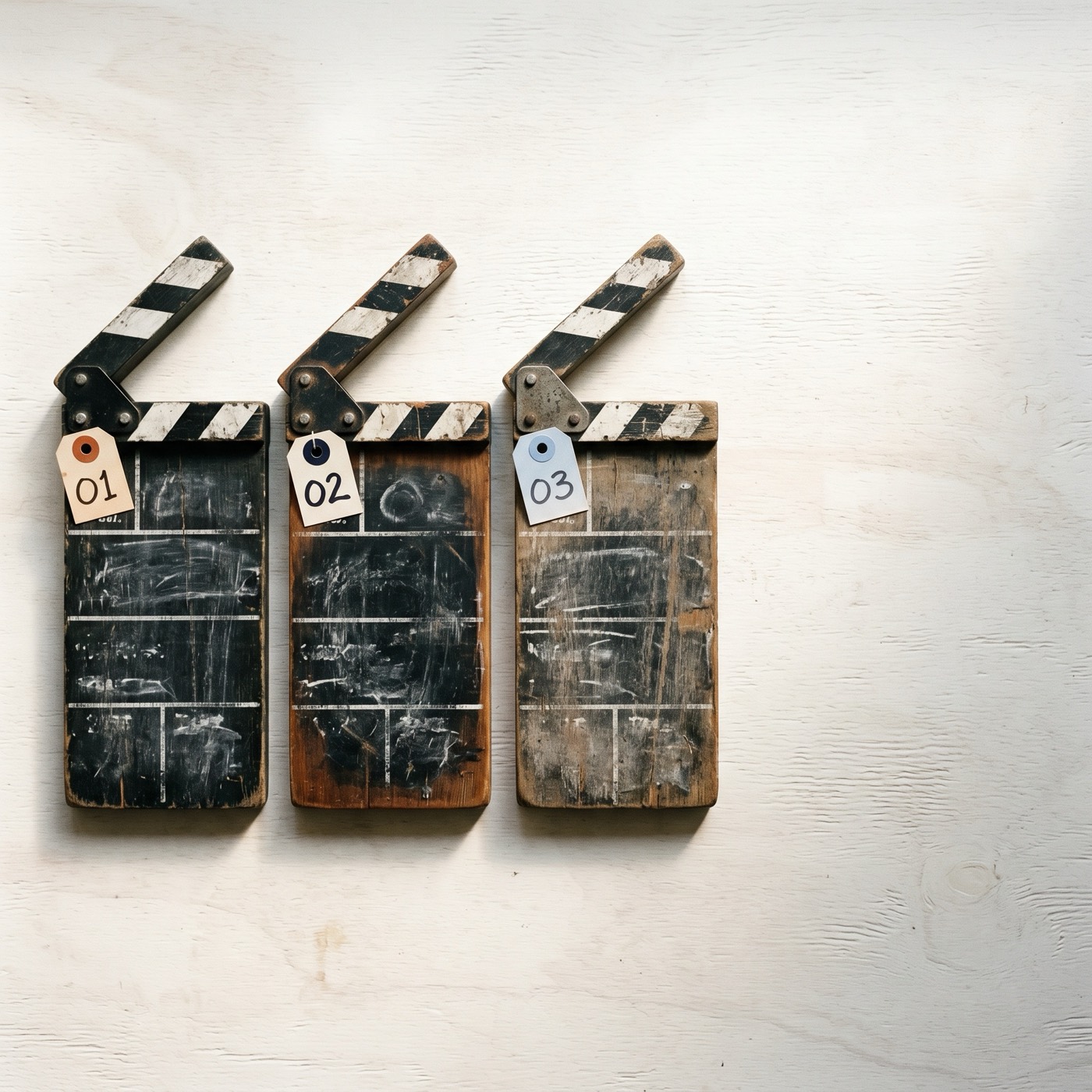
Three clapperboards, three jobs. The wrong model on the wrong brief burns render credits before the creative reaches Ads Manager.
The failure pattern we see most often: a brand picks one AI video model, runs it for six weeks, and every creative starts to rhyme. The brand system has locked onto a single generator's visual language, which then cannibalises variance. The feed reads same same same. CPMs climb, CTR drops, ROAS compresses. Media buyers pause the ad set, the performance director calls a new creative sprint, and the cycle repeats.
The counter pattern is allocation. Sora carries the stopping power of the first second. Veo 3 carries voice and product claims. Runway Gen-4 carries shot continuity across a product system. Mix them in one ad set, and the variance is measurable without a single additional brief.
The three way comparison
This table summarises the specification surface that matters for paid social. AI Vidia tested each model on the same 120 prompts, in 9:16, 1:1, and 4:5, with an identical brand lock style sheet. Prompt adherence is scored on a 0 to 100 scale by our internal QA process. Cost reflects blended enterprise credit pricing at the time of writing. Local pricing will shift; ratios will not.
Dimension
Sora 2
Veo 3
Runway Gen-4
Maker
OpenAI
Google DeepMind
Runway
Max single clip length
20 seconds
8 seconds native, 60 seconds stitched
10 seconds
Native resolution
1080p
1080p
720p, upscaled to 4K on export
Native audio and dialogue
Yes, limited lip sync
Yes, full lip sync and SFX
No, audio added in post
Ad-native aspect ratios
9:16, 1:1, 16:9
9:16, 1:1, 16:9
9:16, 1:1, 16:9
Reference image input
Yes, single
Yes, single
Yes, multi-image scene lock
Blended enterprise cost per 10s
0.60 to 1.20 EUR
0.80 to 1.80 EUR
0.50 to 1.00 EUR
Prompt adherence (AI Vidia 120-prompt test)
78 / 100
86 / 100
71 / 100
Commercial license at paid tier
Yes, broad
Yes via Vertex AI, enterprise grade
Yes, customer owns outputs
Enterprise audit trail
Partial
Full, via Google Cloud logs
API logs only
Best at
Cinematic hook, abstract motion, mood
Dialogue, spokespeople, prompt fidelity
Product continuity, multi-shot scenes
Weakest at
Fine typography, hands
Abstract or surreal scenes
Open world cinematic motion
A few reads from the table that matter more than the numbers. Veo 3 is the only model with reliable lip sync, which is why it wins for founder-led ads, UGC style testimonials, and regulated claim reads. Sora 2 wins the first 1.5 seconds, which is where Meta loses 60 percent of viewers. Runway Gen-4 is the only model that can hold a specific product across 4 shots without the cap flaring or the bottle label drifting. Those are three different jobs. Assigning one model to all three is how you burn the media budget.
The commercial licensing fine print
The three model terms of service look similar on the surface and diverge where it matters. OpenAI permits broad commercial use of Sora outputs on paid plans, but requires that generated people and voices do not impersonate identifiable individuals without consent. Google Veo 3 via Vertex AI is the only one with an enterprise contracting path that supports DPAs, EU data residency, and a full audit trail of every prompt and parameter, which is what Legal teams actually ask for. Runway retains ownership with the customer on Standard and Enterprise plans but does not ship the same audit depth as Google Cloud.
Meta and TikTok are both tightening AI disclosure rules for paid reach. As of April 2026, ads containing photorealistic AI-generated representations of people, places, or events must be marked as such. AI Vidia delivers every ad package with a signed prompt-and-model log so the advertiser's Legal can cross check in under 5 minutes. That is the kind of operational discipline that does not come free with a DIY license.
Prompt craft that scales across all three
The same prompt produces three meaningfully different outputs. That is either an annoyance or a leverage point depending on how you prompt. The AI Vidia team's internal playbook has three rules. Rule one: open every prompt with a camera verb (tracking, push-in, dolly, slow pan) and a lens length. All three models respect camera language, which locks the frame composition. Rule two: describe the light before you describe the subject. North-facing window light, soft falloff, 45 degree key. That holds the mood regardless of model and makes brand lock possible across renders. Rule three: name product continuity explicitly. Keep the label consistent, hold the cap shape, match the color to reference. Runway reads that perfectly; Sora and Veo listen enough to keep variance low.
The same base prompt template gives you 80 percent of the output, and then you tune the last 20 percent per model. That is how a 3 person team reaches 150 variants a week without burning out on prompt engineering.
Want a structured plan for your AI creative pipeline? 20-minute call, no pitch deck.
This is the framework the AI Vidia team runs on every Performance Retainer. It has 6 steps. Each step pins one decision and rules out one common failure mode.
Segment the ad by creative role. Break every ad brief into three slots: the hook, the proof, the product reveal. A 9:16 ad gets 3 seconds of hook, 5 to 9 seconds of proof, and 2 seconds of product reveal with a callout. Naming the slots lets you generate them in parallel and stitch them in an editor rather than forcing one model to do all three.
Assign the model by strength. Route the hook to Sora 2 for cinematic attention capture. Route the proof to Veo 3 when dialogue or a spokesperson is required. Route the product reveal to Runway Gen-4 when continuity across SKUs or colors is required. Override this rule only when you have evidence from your last sprint.
Set a cost ceiling per winning variant, not per render. Budget 25 to 60 EUR in credits per winning ad variant, measured as a variant that survives the first 72 hour creative test at or above account benchmark CTR. Per render cost is a vanity figure. Per winner cost is the one the CFO cares about.
Brand lock before volume. Generate a 6 asset reference sheet for every new product or campaign in Runway Gen-4 using a 3 image scene lock. Feed those frames into Sora and Veo 3 prompts as style anchors. This is how AI Vidia hits a 99.2 percent brand-safe pass rate.
Batch render in ratios and variants together. For each approved hook, render 5 variants in 9:16 plus 5 in 1:1. Do not render ratios serially. Serial rendering doubles handle time and halves throughput. Parallel variants cost the same in credits and ship 2.3x faster.
Score, kill, and reallocate in a 10 day cadence. At day 10 of a sprint, kill every variant below 80 percent of the account CTR benchmark, double spend on winners, and reallocate next week's render budget toward the model that produced the winner. Do not wait for a 30 day report; the algorithmic deprecation is faster than that.
Run these steps as a weekly cadence. A 3 person creative team using this matrix inside the AI Vidia stack can ship 30 to 50 variants per week from week two, and 80 to 150 from week three.
Kevin's take
A food brand we work with tried to standardize on Veo 3 because the founder was impressed by the demo reel. Three weeks in, their product-in-motion shots were winning, but their UGC-style creator vignettes were flat. We routed creator work to Runway Gen-4 and cover stills to Sora. Weekly winner rate doubled without changing the brief or the spend.
Proof this allocation actually ships winners
AI Vidia has shipped 1,834 AI videos and 70,342 AI images across 48 brands in 14 countries, with more than EUR 2.4M in ad spend optimized behind those assets. Brand-safe pass rate: 99.2 percent. Winning ad cohorts: 2.4x ROAS median on UGC, 38 percent CTR lift on average on video, 62 percent lower creative production cost in 90 days.
Veo 3 wins product physics. Runway Gen-4 wins creator vignettes. Sora wins scene coverage. Same brand, three tools, three jobs.
The sharpest proof point is IndianBites, a DTC food brand AI Vidia ran through an 11 week sprint. The AI Vidia team used exactly the allocation above: Runway Gen-4 for the brand-locked plating and garnish continuity, Sora for the first second hook, Veo 3 for recipe-in-action narration. The result: 142 AI ads shipped in 11 weeks, 12x weekly test volume, and the Head of Growth quote that has traveled further than anything else we have published: AI Vidia cut our creative production cost 62 percent in 90 days, and our win rate in paid social is higher than when we paid 10x more.
The Video Allocation Matrix picks the model per brief. The cadence below is how AI Vidia operates three video tools in parallel without dropping briefs or blowing render minutes.
Monday: brief triage and routing. Brief lead tags every video variant with a model (Sora, Veo 3, or Runway Gen-4) based on the allocation matrix. Product-in-motion routes to Veo. Talent and creator vignettes route to Runway. Scene and cover shots route to Sora. Unclear defaults to Veo 3 for first pass.
Tuesday: parallel render batch. Render all tagged variants in parallel. First-pass budget is three render passes per variant. Anything that exceeds three gets rebriefed, not rerendered. This single rule cut our wasted render minutes 30 percent in month two of the 1,834 run.
Wednesday: brand-safe QC and reroute. Run every render through the 14 point brand-safe rubric. Motion physics fails from Sora reroute to Veo. Identity drift from Runway reroutes to Sora. Anything that fails twice goes back to brief, not to another model.
Thursday: ratio cuts and captions. Cut every winning render to 9:16, 1:1, and 4:5. Caption pass per market. Music license check per clip. Steady state cut time is under 20 minutes per asset.
Friday: allocation debrief. Log model, brief type, render count, and winner status into the allocation tracker. If any brief category has reroute rate above 30 percent, update the allocation matrix for next week. The matrix is recalibrated every Friday.
When each model wins on its own
Sometimes allocation is overkill. If you are a pre-seed brand with one SKU and a fixed hero shot, pick one model, learn its defaults, and ship. Here is the quick rule.
Pick Sora 2 if the bottleneck is attention. You are competing in a saturated category, CPMs are 18 EUR plus on Meta, and the first 1.5 seconds of your ad is losing half the audience. Sora's cinematic motion and dramatic light falloff solve this cheaper than any other model. It is also the right pick for brand films, manifesto pieces, and top of funnel awareness where prompt fidelity matters less than mood.
Pick Veo 3 if the bottleneck is claims, dialogue, or regulated messaging. Skincare, supplements, fintech, insurance, pharma adjacent wellness. Veo 3 lip syncs cleanly, tracks spoken numbers and percentages accurately, and ships with the strongest enterprise audit trail. When Legal asks where a creative came from, a Vertex AI log answers the question.
Pick Runway Gen-4 if the bottleneck is product continuity. You have a 20 SKU skincare range, or a 40 color fashion collection, or a stacked meal-kit menu, and the same bottle, garment, or plate must read identically across 30 ads. Runway's multi-image scene lock is the only reliable way to hold that continuity at scale today.
Stop reading if you have more than 100 ads to ship per month. At that volume the allocation matrix above is the only thing that scales. Book a call.
The next step
If this read like a spec sheet you could not have written in house, that is because it is distilled from 1,834 shipped videos, not one pilot. Book a 30 minute Performance Retainer scoping call at book, review our full video service surface at ai-video-ads, or read the author at about/kevin-dosanjh. We ship the first creative inside 72 hours of kickoff.
Frequently asked questions
01Which is better for paid social, Sora or Veo 3?
Neither wins outright. Sora 2 is better for the first 1.5 second hook because its motion and light falloff hold attention in a saturated feed. Veo 3 is better for the proof section of the ad because it lip syncs cleanly and tracks claim language accurately. AI Vidia runs both in the same ad, not in isolation, which is how we hit a 2.4x ROAS median on winning cohorts.
02Is Runway Gen-4 still relevant after Sora and Veo 3 launched?
Yes, for one specific job: product continuity. Runway Gen-4 supports multi image scene lock, which no competing model does reliably at the time of writing. If a brand needs the same bottle, garment, or plate to read identically across 20 or 40 ad variants, Runway Gen-4 is the only production-ready option. AI Vidia uses it as the brand lock engine on every SKU-heavy client.
03What does a 10 second ad clip cost across the three models?
Blended enterprise pricing at the time of writing runs 0.60 to 1.20 EUR per 10 seconds on Sora 2, 0.80 to 1.80 EUR on Veo 3, and 0.50 to 1.00 EUR on Runway Gen-4. These numbers are render cost, not the cost per winning ad variant. Per winning variant AI Vidia budgets 25 to 60 EUR in model credits, which accounts for kills and reshoots. CFO math should use winner cost, not render cost.
04Can you legally run AI video ads from these models on Meta and TikTok?
Yes at the paid commercial tier on all three, with caveats. OpenAI and Runway grant broad commercial rights on paid plans, and Runway customers retain ownership of outputs. Veo 3 via Google Vertex AI ships the only enterprise grade audit trail that satisfies most Legal teams out of the box. Meta and TikTok both require human review for disclosures, and AI Vidia keeps a signed prompt-and-model log on every asset to support that.
05How many ad variants can a 3 person team ship using all three models?
Using the AI Vidia Video Allocation Matrix, a 3 person team inside the AI Vidia stack ships 12 variants in week one, 30 to 50 in week two, and 80 to 150 from week three. That output is benchmarked across 48 brands in 14 countries on the Performance Retainer. The limiter is brief quality and brand lock, not model capacity. The models are no longer the bottleneck in 2026.
06Do AI Vidia clients get locked into a single model?
No. The AI Vidia team routes renders across Sora 2, Veo 3, Runway Gen-4, Kling, Pika, and others every week based on the creative role in the ad. Clients get a blended creative output, not a vendor footprint. That is how AI Vidia ships 40 on-brand AI ad variants per brand per month on the Performance Retainer without the creative starting to rhyme.
Next step
Get your first 12 on-brand AI variants in 14 days.
Book a 20-minute strategy call with the AI Vidia team. No pitch deck, just a structured plan for your creative output.